Friday, January 23, 2026
  • Login
198 Japan News
No Result
View All Result
  • HOME
  • BUSINESS NEWS
  • VIDEO NEWS
  • FEATURED NEWS
    • JAPAN US TRADE NEWS
    • JAPAN EU NEWS
    • JAPAN UK NEWS
    • JAPAN INDIA NEWS
    • JAPAN RUSSIA NEWS
    • JAPAN GULF NATIONS NEWS
    • JAPAN AFRICA NEWS
    • JAPAN EGYPT NEWS
    • JAPAN NIGERIA NEWS
    • JAPAN MEXICO NEWS
    • JAPAN BRAZIL NEWS
    • JAPAN THAILAND NEWS
    • JAPAN INDONESIA NEWS
  • CRYPTO
  • POLITICAL
  • TECHNOLOGY
  • JAPAN AGRICULTURE NEWS
    • JAPAN MANUFACTURE NEWS
    • JAPAN AGRICULTURE NEWS
    • JAPAN IMMIGRATION NEWS
    • JAPAN UNIVERSITY NEWS
    • JAPAN EDUCATION NEWS
    • JAPAN VENTURE CAPITAL NEWS
    • JAPAN JOINT VENTURE NEWS
    • JAPAN BUSINESS HELP
    • JAPAN PARTNESHIPS
  • ASK IKE LEMUWA
  • CONTACT
198 Japan News
  • HOME
  • BUSINESS NEWS
  • VIDEO NEWS
  • FEATURED NEWS
    • JAPAN US TRADE NEWS
    • JAPAN EU NEWS
    • JAPAN UK NEWS
    • JAPAN INDIA NEWS
    • JAPAN RUSSIA NEWS
    • JAPAN GULF NATIONS NEWS
    • JAPAN AFRICA NEWS
    • JAPAN EGYPT NEWS
    • JAPAN NIGERIA NEWS
    • JAPAN MEXICO NEWS
    • JAPAN BRAZIL NEWS
    • JAPAN THAILAND NEWS
    • JAPAN INDONESIA NEWS
  • CRYPTO
  • POLITICAL
  • TECHNOLOGY
  • JAPAN AGRICULTURE NEWS
    • JAPAN MANUFACTURE NEWS
    • JAPAN AGRICULTURE NEWS
    • JAPAN IMMIGRATION NEWS
    • JAPAN UNIVERSITY NEWS
    • JAPAN EDUCATION NEWS
    • JAPAN VENTURE CAPITAL NEWS
    • JAPAN JOINT VENTURE NEWS
    • JAPAN BUSINESS HELP
    • JAPAN PARTNESHIPS
  • ASK IKE LEMUWA
  • CONTACT
No Result
View All Result
198 Japan News
No Result
View All Result
Home JAPAN US TRADE NEWS

Are we learning the wrong lessons from history?

by 198 Japan News
July 3, 2022
in JAPAN US TRADE NEWS
Reading Time: 5 mins read
A A
0
Are we learning the wrong lessons from history?
Share on FacebookShare on Twitter


You might also like

Study finds 99% of eel products worldwide come from endangered species

Nissan works on developing self-driving technology

Trump’s $100,000 visa targets a $280 billion India success story

Can historians influence government policy? Should they? And, if so, what kinds of historical knowledge should they produce?

I suspect policy-makers only rarely think of historians as a first port of call when seeking guidance. And historians, for their part, don’t usually have policy-makers in mind as a primary audience. But historians in Australia – as elsewhere – have long been involved in policy debate.

There are traps for those who travel this road. Interpreting the past might offer clues and insights, but it doesn’t normally present clear lessons. The priorities of political players and historians are often in tension, and history risks being misused.

Two recurring examples illustrate this well: the allegation that Australia’s economic decline in the twentieth century was caused by the interventionist policies reversed by the governments of the 1980s and 1990s, and the failure of “appeasement” in the period before the second world war.

In both examples, which I deal with my contribution to a new book, Lessons from History, professional historians have produced careful and accessible research. And yet simplistic versions have circulated within media, think tanks and government, with little or no regard for the evidence.

Read more: Did Australia just make a move to the left?

A ‘guilty’ man goes to Munich

The failure of the policy of appeasing Hitler in the 1930s has been a favourite among politicians wishing to make war. In this story, the villain is Neville Chamberlain, who gave concessions to Nazi Germany in a vain effort to achieve “peace in our time”. He was one of the “guilty men” who backed the 1938 Munich Agreement, betraying Czechoslovakia and encouraging Germany’s next fateful step: the invasion of Poland the following year.

Winston Churchill, as an opponent of such policies, is seen as a far-seeing prophet and then as a heroic national leader. It is the stuff of Hollywood, all there in the melodrama of films like Darkest Hour (2017).

Seemingly harmless as entertainment, this telling has arguably been the costliest instance of historical illiteracy in the modern world. Its example stretches from Korea in 1950 and the Suez crisis of 1956 through the Vietnam war in the 1960s, down to the “war on terror” and its manifestations in Afghanistan and Iraq. In each instance Munich is treated as the ultimate “symbol of weakness in the face of aggression”.

Political leaders use “Munich” selectively and opportunistically. A good example came in 2005, when foreign minister Alexander Downer presented the Earle Page Annual Lecture at the University of New England.

The lecture was delivered at a time when Australia had forces in both Afghanistan and Iraq. The Iraq war, justified by its proponents using the Munich/Hitler analogy, had become unpopular. The case it was a grand struggle against a dangerous global threat had collapsed when it became clear governments had misused intelligence about weapons of mass destruction.

American troops had been exposed as brutally humiliating their captives in an Iraqi prison. Iraq had run an election but was descending into a morass of sectarian violence and deadly terrorism.

Downer felt it was more necessary than ever to see the war on terror – in Iraq and elsewhere – as a “great struggle […] between freedom and terror and its totalitarian ideology”. For him, it was the descendant of previous great struggles such as that against Hitler.

History versus politics

Downer’s purpose was also more narrowly partisan. He wanted to contrast the Coalition as a party of duty and principle, prepared to resist tyranny and defend liberty, and the Labor Party, with its record of what he called “weak leadership” on “appeasement, isolationism and shirking international treaty obligations”. And he wanted to present Labor as a party of weakness in 1938 no less than in 2005.

The principal objection to Downer’s understanding of history might simply be that it is wrong, and not in a disinterested way. As Christopher Waters has shown in his study of Australia and appeasement, the United Australia Party and the Country Party in the 1930s – forerunners of Downer’s Liberals – were full of staunch advocates of appeasement.

Indeed, all the major conservative politicians – Joseph Lyons, Robert Menzies, Richard Casey, Earle Page and Australia’s high commissioner in London, Stanley Melbourne Bruce – strongly opposed war over Hitler’s mounting aggression. Even some days after Germany’s invasion of Poland in September 1939, Menzies remained unconvinced it was worth going to war and hoped for a negotiated peace.

These attitudes might have veered towards cynicism where they were not deliberately dishonest, but they are also comprehensible in view of the circumstances of the time.

The desire to avoid another war was intense. Casey, Bruce and Page had all served in the previous one. The Australian government feared Japan, which it also tried to appease. It worried that a German challenge to Britain would undermine the British Empire’s ability to protect its colonies and dominions in the Far East and Pacific.

Labor leader John Curtin – like Lyons, a first world war anti-conscriptionist – and members of his party were not so much appeasers as isolationists, wishing to keep Australia clear of a war in Europe.

On Japan, Curtin’s views arguably did approach appeasement in the months before Pearl Harbor. But his attitude and approach were hardly distinguishable from those of Menzies. Sensibly, neither wanted a war in the Pacific against Japan if it did not also involve the United States.

Such contexts and nuances are, of course, of no interest to a foreign minister wishing to score points against his opponents. Nor do I doubt for a moment that historians have an uphill struggle in countering the Munich analogy. To win this argument would also mean vanquishing the Churchill cult, an unlikely prospect.

Learning from these pasts

Our only hope in the struggle to prevent the misuse of the past might be to work to increase historical literacy from the ground up, from school through workplace to retirement village.

And the most critical capacity we need to develop is the ability of the decision-makers, and in the media, think tanks and the bureaucracy, to draw nuanced historical lessons informed by a sense of context.

This will not be an easy task. There is limited taste for knowledge that recognises its own limitations and uncertainties. Too many politicians demand a readily usable past that can be slotted into ready-made categories of their own devising.

Read more: New research reveals our complex attitudes to Australia Day

The quest for historical literacy must also resist the injunctions of conservative education ministers for a history curriculum that reflects their own ideology. It may well require historians to rethink where they publish: the highly specialised article in a top-ranked international journal sitting behind a paywall, beloved of university bean-counters, may well be less significant than the high-quality school textbook.

At the very least, we need to ensure there are avenues of transmission and communication between the one and the other, as well as between the historical profession and policymakers.

Historians must never cease to be themselves, but nor do they have the luxury of being able to shut out a world they have a deep professional and moral obligation to interpret as well as change.

This article draws on Frank Bongiorno’s contribution to Lessons from History, published this week by NewSouth.

Author: Frank Bongiorno – Professor of History, ANU College of Arts and Social Sciences, Australian National University The Conversation


Source link

Tags: historylearningLessonsWrong
Share30Tweet19

Recommended For You

Study finds 99% of eel products worldwide come from endangered species

by 198 Japan News
September 23, 2025
0
Study finds 99% of eel products worldwide come from endangered species

TOKYO - More than 99 percent of eel products sold in 11 countries and regions worldwide come from three species at risk of extinction, a recent joint study...

Read moreDetails

Nissan works on developing self-driving technology

by 198 Japan News
September 22, 2025
0
Nissan works on developing self-driving technology

TOKYO, 22nd September, 2025 (WAM) -- Japanese automaker Nissan is developing new self-driving technology as it works to turn around its struggling auto business.In a recent demonstration of...

Read moreDetails

Trump’s $100,000 visa targets a $280 billion India success story

by 198 Japan News
September 22, 2025
0
Trump’s 0,000 visa targets a 0 billion India success story

U.S. President Donald Trump’s move to curtail H-1B visas threatens to rewrite the rules for one of India’s biggest business success stories, a decades-old model that’s grown into...

Read moreDetails

Anna Hall wins first heptathlon for U.S. since Jackie Joyner-Kersee

by 198 Japan News
September 20, 2025
0
Anna Hall wins first heptathlon for U.S. since Jackie Joyner-Kersee

(Photo credit: Kirby Lee-Imagn Images)Anna Hall dominated from start to finish to win her first heptathlon world title with a 6,888-point performance at the World Track and Field...

Read moreDetails

NASA scientist starts food crisis hotline with tech giant funding

by 198 Japan News
September 20, 2025
0
NASA scientist starts food crisis hotline with tech giant funding

Right after Russia’s full-scale invasion of Ukraine, crop scientist Inbal Becker-Reshef got a letter from officials in Kyiv. They wanted to figure out how much wheat and other...

Read moreDetails
Next Post
Your Monday Briefing: Russia Seizes Lysychansk

Your Monday Briefing: Russia Seizes Lysychansk

K-2010, Road to Prosperity

K-2010, Road to Prosperity

  • Trending
  • Comments
  • Latest
Unmasking in U.S. comes too soon for some still wary of COVID’s wiles

Unmasking in U.S. comes too soon for some still wary of COVID’s wiles

February 19, 2022
Tariffs, tantrums, and tech: How Trump’s trade drama is keeping Indian IT on tenterhooks

Tariffs, tantrums, and tech: How Trump’s trade drama is keeping Indian IT on tenterhooks

August 13, 2025
The problem of global energy inequity, explained by American refrigerators

The problem of global energy inequity, explained by American refrigerators

May 21, 2022
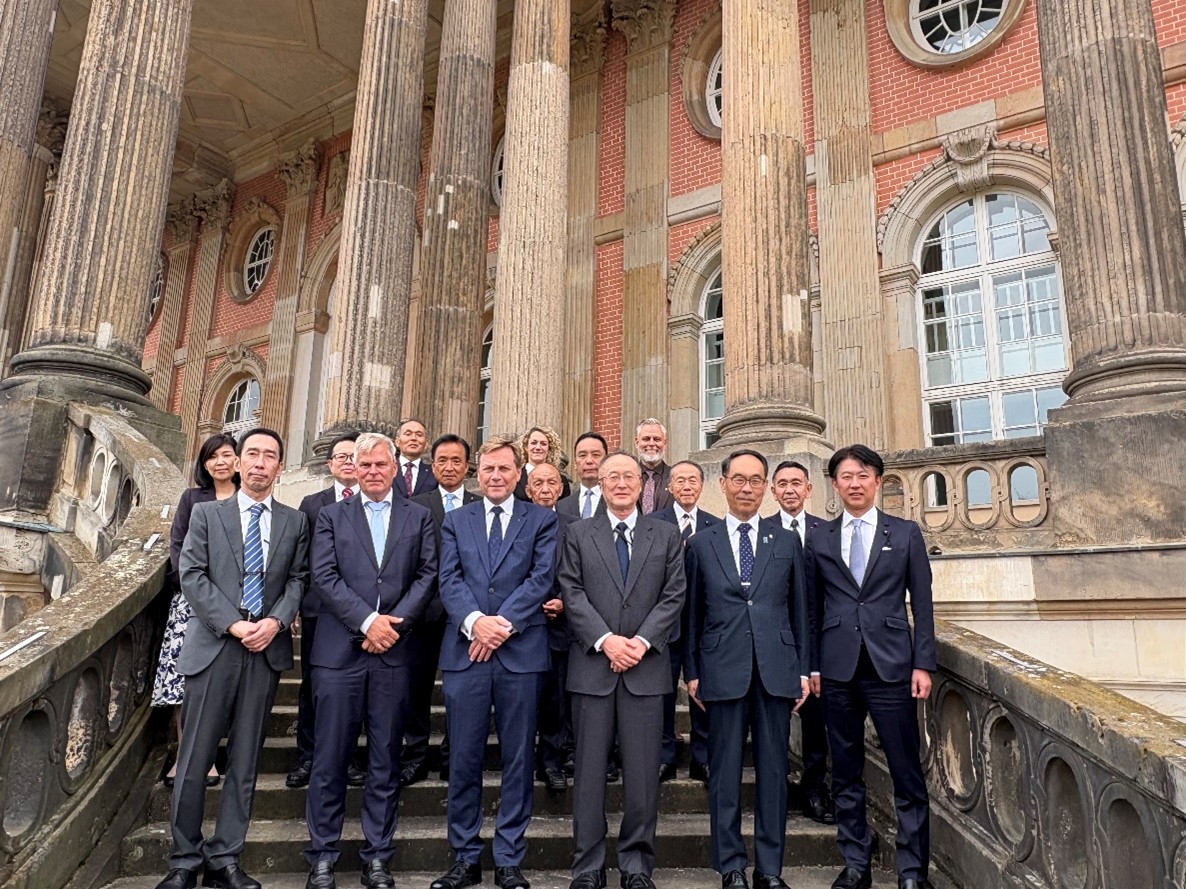
New Academic Partnership Established with the University of Potsdam

New Academic Partnership Established with the University of Potsdam

September 19, 2025
Cyberattack disrupts European airports including London’s Heathrow and Brussels

Cyberattack disrupts European airports including London’s Heathrow and Brussels

September 20, 2025
Japan qualifies for men’s 4×100 relay final at world championships

Japan qualifies for men’s 4×100 relay final at world championships

September 20, 2025
Japan’s recognition of Palestine state is a matter of ‘when,’ Iwaya says

Japan’s recognition of Palestine state is a matter of ‘when,’ Iwaya says

0
Singapore shipper rejects B damages over Sri Lanka’s worst pollution incident

Singapore shipper rejects $1B damages over Sri Lanka’s worst pollution incident

0
Drone sightings disrupt flights at Copenhagen, Oslo airports

Drone sightings disrupt flights at Copenhagen, Oslo airports

0
Sirens blare as Japan issues tsunami warning after powerful quake in Russia | ABS CBN News

Sirens blare as Japan issues tsunami warning after powerful quake in Russia | ABS CBN News

0
Study finds 99% of eel products worldwide come from endangered species

Study finds 99% of eel products worldwide come from endangered species

0
‘Russian troops retreat’ as Ukraine claims to have turned tide on front in brutal counter-offensive

‘Russian troops retreat’ as Ukraine claims to have turned tide on front in brutal counter-offensive

0
Japan’s recognition of Palestine state is a matter of ‘when,’ Iwaya says

Japan’s recognition of Palestine state is a matter of ‘when,’ Iwaya says

September 23, 2025
Singapore shipper rejects B damages over Sri Lanka’s worst pollution incident

Singapore shipper rejects $1B damages over Sri Lanka’s worst pollution incident

September 23, 2025
Drone sightings disrupt flights at Copenhagen, Oslo airports

Drone sightings disrupt flights at Copenhagen, Oslo airports

September 23, 2025
Palestinian envoy urges Japan to recognize state after France, U.K. and others

Palestinian envoy urges Japan to recognize state after France, U.K. and others

September 23, 2025
BOJ seeks to remove stocks overhang with slow sell-down of ETFs

BOJ seeks to remove stocks overhang with slow sell-down of ETFs

September 23, 2025
Study finds 99% of eel products worldwide come from endangered species

Study finds 99% of eel products worldwide come from endangered species

September 23, 2025
  • Browse the latest updates from Japan
  • Contact us
  • Cookie Privacy Policy
  • Disclaimer
  • DMCA
  • Privacy Policy
  • Terms and Conditions

Copyright © 2026 198 Japan News.

Welcome Back!

Login to your account below

Forgotten Password?

Retrieve your password

Please enter your username or email address to reset your password.

Log In
No Result
View All Result
  • Browse the latest updates from Japan
  • Landing Page
  • Buy JNews
  • Support Forum
  • Contact Us

Copyright © 2026 198 Japan News.